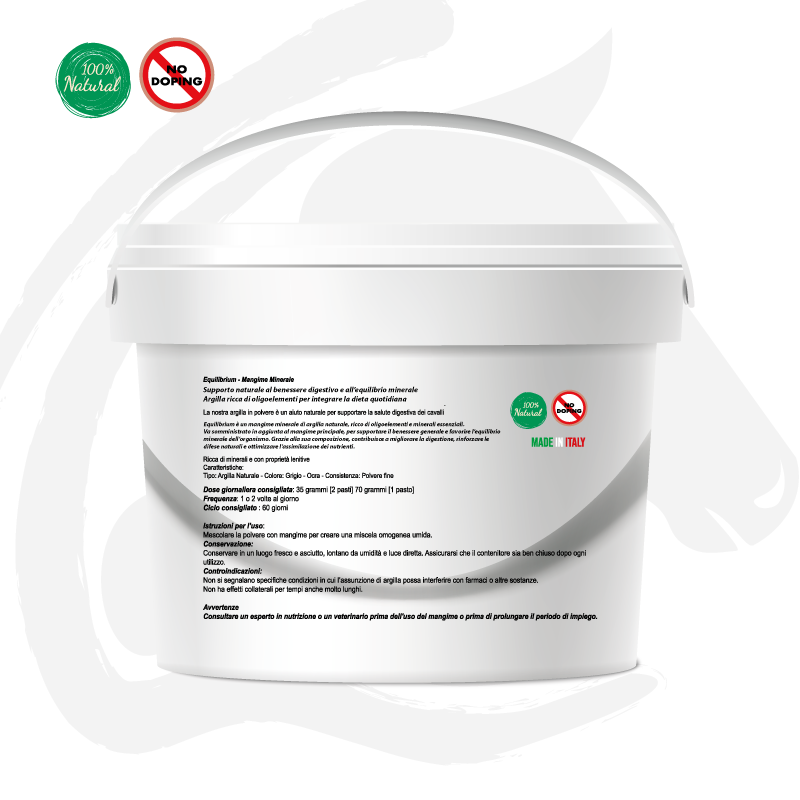



Description
FEATURES
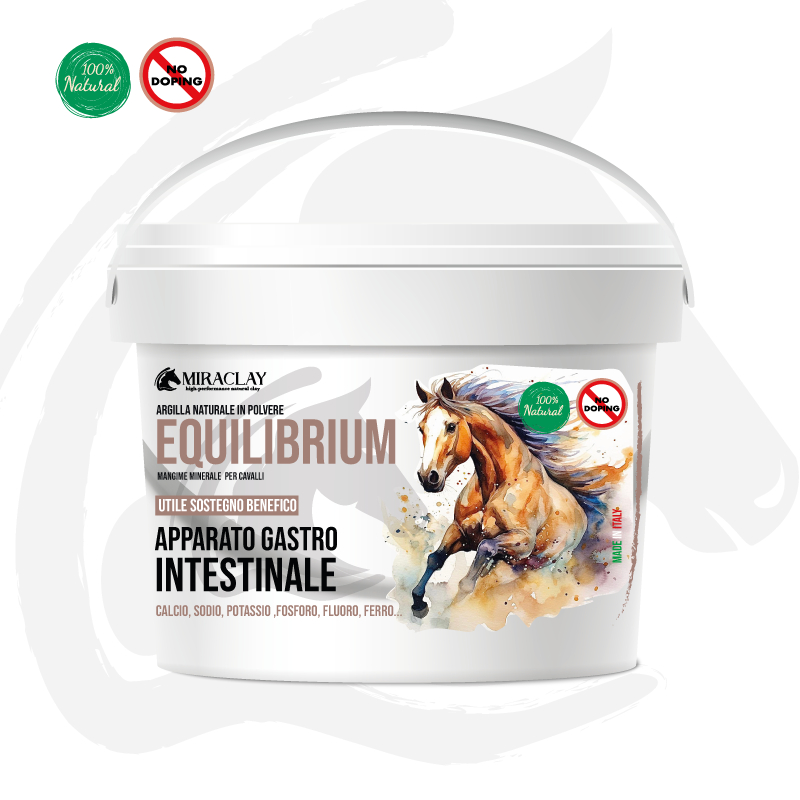
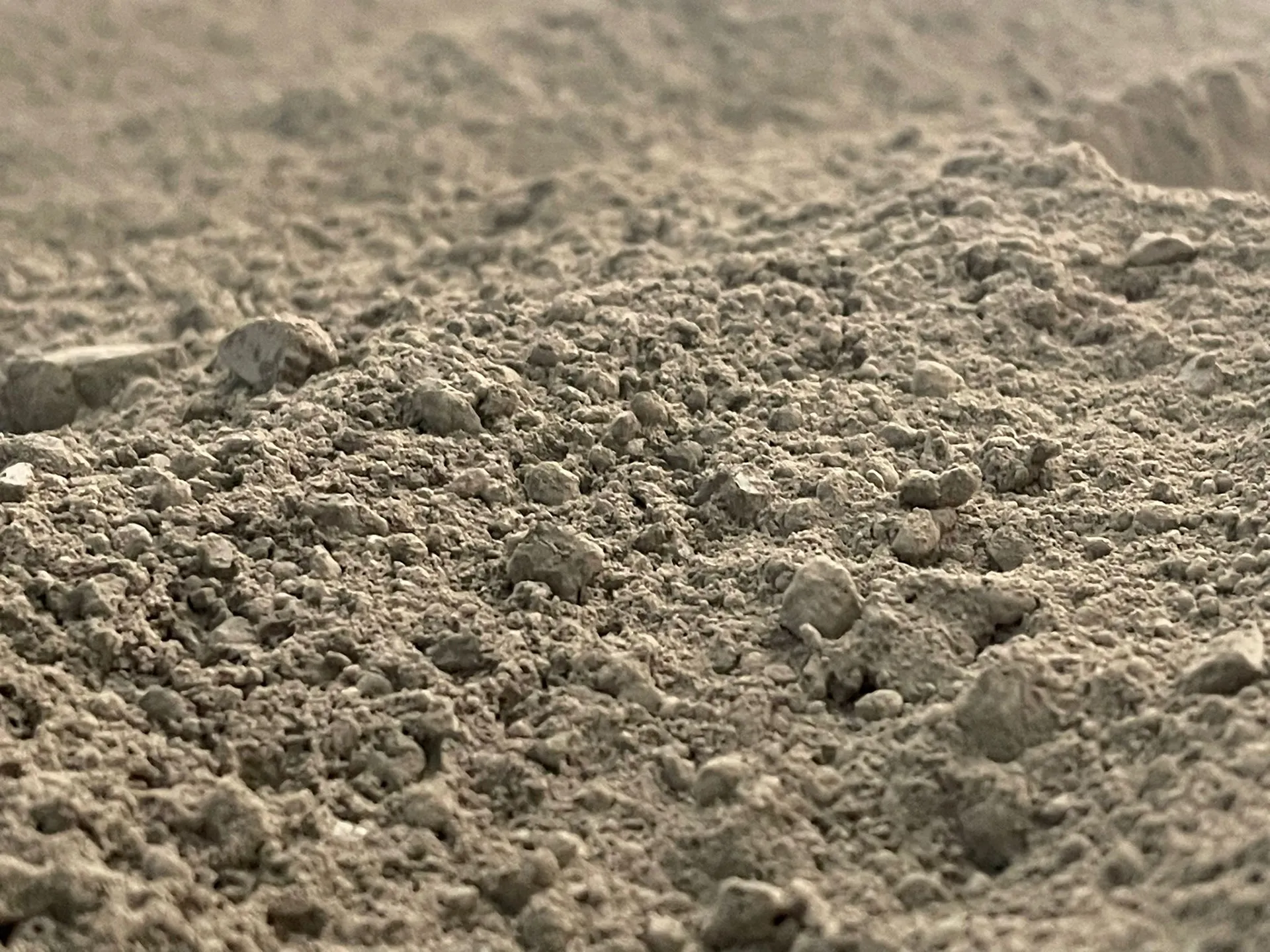
Equilibrium is a mineral feed made entirely from 100% natural micronized clay. Naturally rich in minerals and trace elements—such as silica, magnesium, calcium, potassium, iron, zinc, copper, aluminum, vanadium, sodium, titanium, and more.
It contains no additives, molasses, flavors, or colorings. Completely doping-free.

Why Choose Equilibrium

"Equilibrium: 100% Natural Clay for Animal Well‑Being"
High adsorptive capacity (CEC): the clay’s layers bind water, charged molecules, and certain naturally occurring undesirable substances in feed (e.g., fractions of mycotoxins), helping to normalize stool consistency.

"Adsorptive and Protective Action of Clay
Mucosal protective effect: smectites interact with mucins, strengthening the barrier and supporting the gastrointestinal mucosa. A university study demonstrated that Equilibrium can positively affect the gastric mucosa, providing protective support and aiding in the management of minor ulcers or irritations caused by stress, training, or concentrated feed.

Natural digestive support and balanced mineral supply:
100% natural product: generally well tolerated at the recommended doses. Overdosing: may cause firmer stool or constipation; reduce the dose and increase hydration if this occurs. Precautions: do not use in cases of intestinal obstruction, severe ongoing constipation, or colic; consult a veterinarian. Pregnancy/lactation: nutritional use is allowed at the recommended doses unless otherwise advised by a veterinarian.
🟢 "Safety and Tolerability"
100% natural product: generally well tolerated at the recommended doses. Overdosing: may cause firmer stool or constipation; reduce the dose and increase hydration if this occurs. Precautions: do not use in cases of intestinal obstruction, severe ongoing constipation, or colic; consult a veterinarian. Pregnancy/lactation: nutritional use is allowed at the recommended doses unless otherwise advised by a veterinarian.
Main Benefits:
Miraclay smectitic clay has a layered surface that binds molecules and water. Upon reaching the stomach, it: forms a protective film on the mucosa, reducing damage from acids and pepsin; exerts a moderate buffering effect, helping to smooth out acidity peaks. This mechanism does not “heal” ulcers, but it can reduce irritation and support natural recovery. In various studies, horses showed fewer clinical signs (e.g., reduced appetite, mild colic). Therefore, it is possible that your horses experience less gastric discomfort and regain appetite thanks to the clay’s physical and protective action—not because the minerals alone heal the ulcers.
When should you use it?
Periods of intense training or competition.
Travel and changes in stable or diet.
Seasonal transitions and periods of management-related stress.
Diets at risk of mycotoxins (silage/hay or cereals of variable quality).
Dosage and Administration
Standard dose (adult 450–600 kg): 60–70 g/day mixed with feed.
Guidelines by body weight:
Ponies/young horses 200–350 kg: 30–40 g/day
Horses 350–450 kg: 50–60 g/day
Horses 450–600 kg: 60–70 g/day
Over 600 kg or very intense work: 70–90 g/day
Loading dose (periods of high stress): increase by 20–30% for 7–10 days, then continue with the maintenance dose.
Administration: mix with feed. For selective eaters, slightly moisten or mix with a small amount of oil or water. Always provide fresh water.
Timing with other products: separate by 3–4 hours from medications or sensitive supplements, as clay may adsorb them and reduce bioavailability. For oral therapies, follow the veterinarian’s instructions.
Duration: continuous use or 30–60 day cycles. During critical periods (travel, competitions), start 5–7 days in advance.
Recommended Feed Pairings
To maximize the benefits of Equilibrium (micronized clay rich in natural minerals), it’s best combined with feeds that support mineral absorption and respect the intestinal balance of performance or stressed horses.
High-Fiber Mash (e.g., bran, flaxseeds, beet pulp)
Ideal for mixing with Equilibrium and enhancing palatability
Supports digestive regularity
Promotes hydration through moist administration
Complementary Feed with Flaked Grains + Fiber + Vegetable Oil
Provides high energy for demanding disciplines (gallop, jumping, endurance)
Excellent carrier for microelements and natural phytocomplexes
Supports muscle mass and post-workout recovery
Feeds with Probiotics and Prebiotics
Enhance Equilibrium’s protective effect on gastric mucosa
Recommended for horses with gastric sensitivity or mild ulcers
🔎 Important Note
To get the most out of Equilibrium and ensure correct nutritional integration, it is strongly recommended to consult a veterinarian or equine nutritionist. Tailor the use based on your horse’s specific needs, discipline, and current diet.
"What This Means in Practice for Horse Caregivers"
Horses that previously left oats or hay due to stomach discomfort regain their appetite.
Animals are calmer, showing fewer signs of gastric irritation (cribbing, pawing, nudging, or reluctance to be saddled).
Coat becomes shinier and more uniform: when the stomach is protected, the horse better absorbs nutrients and minerals such as zinc, copper, and silica, which is reflected in the hair.
Stool is more regular and firm, indicating improved intestinal function.
Why do horses start eating again?
Stress reduces appetite, mainly due to gastric discomfort and altered intestinal motility.
With micronized Miraclay clay:
mucosal irritation is reduced, so the horse experiences less pain;
stools become more stable and intestinal transit more regular.
The result is a horse that eats willingly again—more energy, better performance.
Why does the coat improve?
Coat improvement does not depend on a single mineral, but on a combination:
Zinc (Zn): essential for keratinization and skin/coat health.
Copper (Cu): enzymatic cofactor in melanin production and collagen formation.
Silica (Si): important for the elasticity and strength of connective tissues, skin, and mane.
Iron (Fe): supports hemoglobin production and tissue oxygenation, which also reflects on coat vitality and quality.
Magnesium and Potassium: support metabolism and neuromuscular regulation, contributing to overall well-being.
When the horse eats better, it absorbs these minerals and those from the diet more efficiently, resulting in a shinier, fuller coat.
FAQ
Can it be used with probiotics/yeasts? Yes, excellent synergy. Administer with a 2–3 hour interval.
And with electrolytes? Yes, no issues.
Foals? From >6 months: 0.08–0.10 g/kg body weight/day. Consult a veterinarian for younger foals.
When will I see the first effects? Typically within 7–10 days on appetite and stool consistency; continue for 30 days to stabilize results.
Are there horses that dislike it? Rarely. In such cases, slightly moisten the feed or introduce gradually.